
Table of Contents
ToggleKey Points
- Carpenter ants can bite, but most bites are minor and usually happen only when the ants feel threatened or are handled directly.
- Unlike termites, carpenter ants do not eat wood, but they can still cause damage by tunneling through damp or weakened wood to build nests.
- Homes in South Florida may attract carpenter ants when moisture problems, wood decay, or exterior access points make nesting easier.
- Seeing large ants indoors, especially near bathrooms, kitchens, or damaged wood, can point to a bigger infestation.
- Prevention depends on reducing moisture, sealing entry points, and addressing conditions that make a home attractive to ants.
Carpenter ants are one of the more concerning ants homeowners can find around the house. They are larger than many other ant species, they often show up near moisture-damaged wood, and their presence can raise questions about both bites and structural damage. One of the most common concerns people have is simple: do carpenter ants bite?
The answer is yes, carpenter ants can bite. However, a bite is usually not the biggest problem they create inside a home. In most cases, the larger concern is that carpenter ants may be nesting in damp or damaged wood, especially in areas with chronic humidity or moisture intrusion. In South Florida, that can make bathrooms, laundry rooms, kitchens, attics, and exterior trim especially vulnerable.
If you are seeing large ants indoors and wondering whether they bite, it helps to understand how carpenter ants behave, why they show up in homes, and what signs may indicate a more serious issue.
Do carpenter ants bite humans?
Yes, carpenter ants can bite people, but they do not usually go out of their way to attack. Most bites happen when the ants are disturbed, trapped against the skin, or handled directly during cleanup or inspection.
A carpenter ant bite can feel like a quick pinch because of the insect’s strong mandibles. Some people may also notice mild irritation afterward. In certain cases, carpenter ants may also spray formic acid into the bite area, which can make the sensation feel worse. Even so, carpenter ant bites are usually more startling than serious.
For most homeowners, the bigger takeaway is not whether a carpenter ant can bite, but why it is there in the first place. If carpenter ants are active indoors, there is often an underlying condition making the home attractive to them.
What do carpenter ants look like?
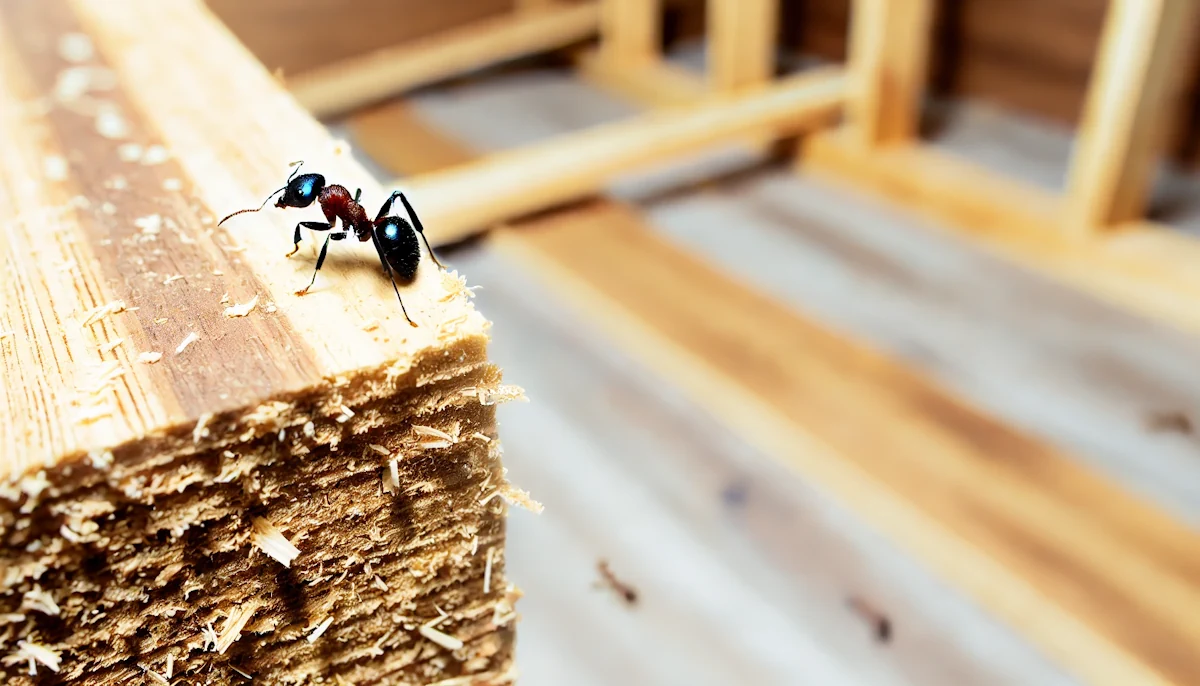
Carpenter ants are usually much larger than the tiny nuisance ants people see in kitchens, bathrooms, or around sinks. They are often black, reddish-black, or dark brown, and they have a more robust body shape than species such as ghost ants or small sugar ants.
Because homeowners often lump many ant species together at first glance, it can help to compare them with other common indoor ants. Someone dealing with very small ants in a moist area may actually be facing a different issue entirely, such as ghost ants in the bathroom or other tiny black ants common in South Florida homes. Carpenter ants stand out because of their larger size and stronger build.
Why are carpenter ants in my house?
Carpenter ants typically move into or around homes because they are searching for suitable nesting conditions and food sources. Unlike termites, they do not eat wood for nutrition. Instead, they excavate wood to create galleries where they can live and expand their colony.
That is why carpenter ants are commonly associated with damp, decaying, or previously damaged wood. A home with chronic moisture problems becomes much more attractive to them, especially if there are soft wood areas around window frames, roof edges, fascia boards, bathrooms, plumbing penetrations, or wall voids.
South Florida homes can be especially vulnerable because high humidity, rain exposure, and hidden leaks create the kind of conditions carpenter ants prefer. This is also why homeowners who first notice ant activity in damp indoor spaces may later realize the issue connects to moisture-heavy rooms, similar to the way ants in a bathroom drain or repeated bathroom ant trails often point to a larger environmental issue.
Do carpenter ants damage wood?
Yes, carpenter ants can damage wood, but not in the same way termites do. Termites consume wood as food. Carpenter ants hollow it out to make nesting space.
Over time, that tunneling can weaken wood, especially if the affected area was already softened by moisture or rot. The longer a colony remains active, the more extensive the galleries may become. In some homes, carpenter ant activity goes unnoticed until the infestation has grown large enough to produce visible signs.
This is one reason carpenter ants are often more than just a nuisance pest. If you are finding them indoors, the problem may involve both pest control and correction of moisture-related conditions.
What are the signs of carpenter ants?
Carpenter ants do not always make themselves obvious right away, but there are several warning signs homeowners should watch for.
Large ants appearing indoors
Seeing large ants regularly inside the home, especially in bathrooms, kitchens, laundry rooms, or near windows and trim, can be a sign of indoor nesting or a nearby outdoor colony.
Activity near damp or damaged wood
Carpenter ants often target areas where moisture has softened the wood. This can include window sills, door frames, rooflines, wall voids, cabinets, or trim around plumbing.
Rustling sounds in walls
In some cases, homeowners may hear faint rustling in walls or wood structures when carpenter ants are active in a nest. That is not always easy to notice, but it can happen in larger infestations.
Small piles of debris
Carpenter ants push debris out of their galleries as they excavate. You may see what looks like sawdust-like material near baseboards, window frames, or nesting sites.
Winged ants indoors
If you see winged ants inside, especially in numbers, that may indicate a mature colony. Some homeowners confuse these swarmers with termites, which is one reason articles comparing white ants and termites can be helpful when trying to sort out what you are actually seeing.
Are carpenter ant bites dangerous?
Carpenter ant bites are not usually dangerous for most people. They can hurt, and the bite may feel surprisingly strong compared with smaller ant species, but serious reactions are uncommon. In most cases, a carpenter ant bite causes temporary discomfort, mild redness, or localized irritation.
That said, sensitivity varies from person to person. Anyone who has an unusual reaction to insect bites in general should monitor symptoms carefully. The presence of biting ants indoors should also prompt identification, because not all ant bites or stings are created equal. For example, fire ants in Florida are much more aggressive and medically concerning than carpenter ants in most household situations.
Why identification matters
Proper identification matters because the right treatment depends on the ant species involved. A homeowner who assumes every large dark ant is a carpenter ant may end up treating the wrong problem, while someone focused only on bites may miss a more important structural warning sign.
This is especially true in Florida, where homes can attract multiple ant species at the same time. Broader educational content about the role of ant species in South Florida ecosystems helps explain why different ants behave so differently, while articles on how ant colonies are structured show why visible worker ants are only a small part of the bigger issue.
How do you get rid of carpenter ants?
Getting rid of carpenter ants usually requires more than killing the ants you see. Because carpenter ants often nest in or around damaged wood, long-term control depends on both eliminating the ants and correcting the conditions that attracted them.
A complete approach usually includes:
- Finding the nest or activity source
- Correcting moisture issues
- Sealing entry points
- Using the right treatment strategy
- Getting professional help when needed
Finding the nest or activity source
This may be indoors, outdoors, or both. Carpenter ants often nest in damp wood but forage more widely for food.
Correcting moisture issues
Leaky plumbing, roof leaks, poor ventilation, wood rot, and chronic humidity should all be addressed. If the moisture remains, the area may stay attractive even after treatment.
Sealing entry points
Cracks around doors, windows, siding gaps, and utility penetrations can all help ants move into the structure.
Using the right treatment strategy
Random spraying may kill visible ants without eliminating the colony. More targeted methods usually work better, especially when paired with exclusion and moisture correction. The same principle applies across other infestations, which is why ant baiting techniques that actually eliminate colonies are often more effective than surface-level treatments alone.
Getting professional help when needed
Because carpenter ants may be tied to hidden nesting and structural moisture issues, professional help is often warranted when activity is persistent.
For homeowners specifically dealing with this species, a more targeted breakdown of effective ways to get rid of carpenter ants can help explain what successful treatment usually involves.
When should you call a professional for carpenter ants?
You should consider professional help when:
- you keep seeing large ants indoors
- ants are showing up near damaged wood or damp areas
- you see winged ants inside
- you suspect nesting in walls, trim, or structural wood
- DIY efforts are not reducing activity
- you want to confirm the ants are carpenter ants and not another species
This is one of those infestations where waiting can make the problem more expensive. If the ants are linked to hidden moisture damage, a growing colony may continue excavating while the source condition gets worse. In situations like that, it often makes sense to step back and evaluate when to hire an ant exterminator instead of relying on repeated temporary fixes.
How to help prevent carpenter ants in South Florida homes
Prevention starts with making the home less attractive to carpenter ants.
A few of the most important steps include:
- fix leaks and moisture issues quickly
- replace water-damaged or rotting wood
- keep gutters and roof drainage working properly
- trim vegetation away from the home
- seal cracks and openings around the exterior
- store firewood and wood debris away from the structure
- respond quickly to indoor ant sightings
Many of these same principles help reduce general ant pressure around the home, especially when paired with the habits covered in things that attract ants into your house. The sooner moisture and access problems are corrected, the less likely carpenter ants are to settle in.
Frequently Asked Questions
-
Do carpenter ants bite or sting?
Carpenter ants bite. They do not sting like fire ants, but their strong mandibles can cause a noticeable pinch if they are disturbed or handled.
-
Are carpenter ants worse than termites?
They are different pests with different risks. Termites eat wood, while carpenter ants excavate it for nesting. Both can be serious, but carpenter ants are often strongly associated with moisture-damaged wood.
-
Should I worry if I see one carpenter ant?
One carpenter ant does not always mean there is a major infestation, but repeated sightings indoors should not be ignored. Regular activity often suggests a nearby nest or a condition attracting them.
-
Do carpenter ants mean I have water damage?
Not always, but carpenter ants are strongly associated with damp or damaged wood. Their presence often makes it worth checking for leaks, rot, or excess humidity around the home.